

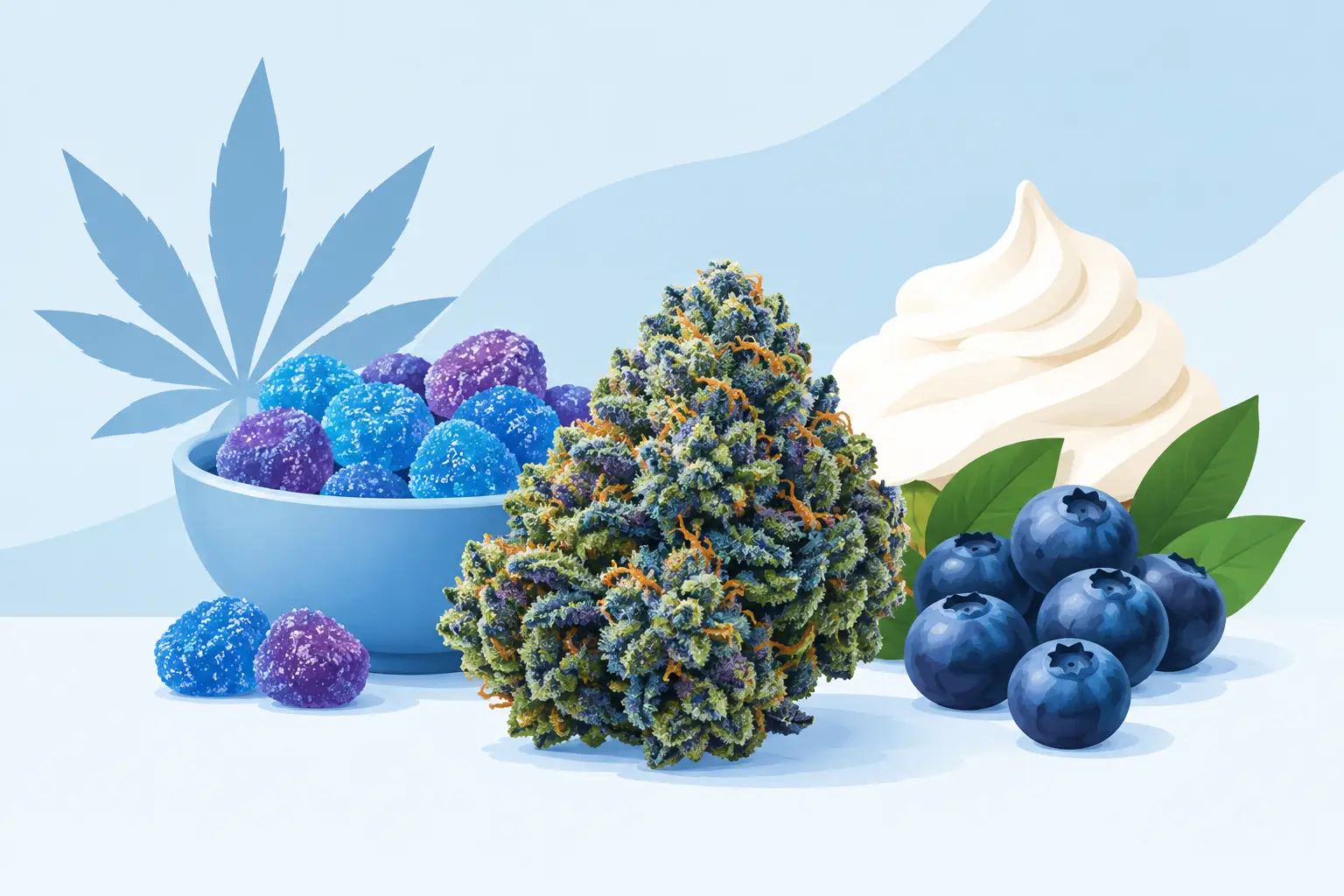
A proper Blue Nerds strain flavour example starts before the first taste. Picture opening a well-cured, fresh batch and catching a rush of sugary berry sweetness, followed by a darker grape-like note and a light herbal edge underneath. The name points towards a confectionery-style profile, but the best expression is not flat or one-note. It should feel bright at first, then fuller and slightly earthy as the aroma settles.
For flavour-led flower fans, that contrast is the point. Blue Nerds is the sort of profile that can appeal to people who enjoy candy-forward strains but still want enough depth to know they are dealing with cannabis, not a bag of sweets. Exact notes can vary between batches, however, so it pays to treat any tasting description as a useful benchmark rather than a guarantee.
Blue Nerds strain flavour example: what it can taste like
The easiest way to describe Blue Nerds is sweet berry candy with grape and citrus-adjacent lift, rounded out by a gentle green, floral or earthy finish. The opening aroma may remind some people of mixed berry chews or blue raspberry-style sweets. Others pick up more dark fruit, particularly grape, blackberry or blueberry skin.
On the palate, the sweetness should not feel syrupy. A quality batch often has a sharper edge that keeps the profile lively, much like the tang behind a fizzy sweet. That tang can present as light citrus zest, sour berry or a cool, almost sherbet-like note. Beneath it, there may be a soft peppery, leafy or woody base that adds weight to the flavour.
This is why two people can describe the same flower differently without either being wrong. One person may lead with “blueberry sweets”; another may say “grape candy with a herbal finish”. Both can be responding to the same layered mix of aromatic compounds, moisture level and their own palate.
A simple tasting sequence
A fresh Blue Nerds-style profile commonly moves in stages. First comes the jar aroma: loud, sweet and fruity. When the flower is gently broken apart, deeper notes tend to appear, including grape, florals and a little earthiness. The lingering impression is often sweeter than the finish itself, with fruit-candy character staying present after the greener notes fade.
That progression matters. If all you get is dry hay, harsh smoke or a stale, dusty smell, it does not tell you much about what Blue Nerds is meant to offer. Storage, age and curing can mute even an originally expressive batch.
Why the flavour is more than a sweet name
Strain names set an expectation, but they do not create flavour on their own. The character people associate with Blue Nerds comes from the interaction of aromatic compounds, including terpenes, alongside the plant’s natural sugars, resins and curing quality. It is that combination that can create the impression of berries, candy, citrus peel or floral sweetness.
A berry-candy aroma does not mean literal berry flavouring has been added to flower. With cannabis, the resemblance is generally sensory: certain compounds can recall fruits, sweets, herbs or spice because the nose and tongue recognise familiar aromatic patterns. The same principle explains why a grape-leaning batch can have a faint peppery or earthy background note.
Growing conditions also play a part. Genetics provide the broad blueprint, yet harvest timing, drying, curing and storage determine how clearly those notes reach the consumer. A rushed cure can leave a profile rough and grassy. Overdry flower can lose much of its top-end aroma. Careful curing is where sweetness, fruit and depth have the room to come through cleanly.
What can change the Blue Nerds flavour experience
The phrase “Blue Nerds flavour” is useful, but it is not a laboratory promise. A few variables can noticeably change what reaches your palate.
Batch variation is normal. Even flower from the same cultivar can lean more towards grape in one harvest and more towards berry or floral notes in another. This does not automatically mean one is better. It depends whether you prefer sweeter fruit, sharper tang or a heavier earthy finish.
Freshness is just as important. Aromatic compounds are delicate. Exposure to heat, air and light gradually dulls them, so a fresh, correctly stored sample is more likely to deliver the loud candy-and-fruit character people expect. Flower that is excessively dry may still be usable, but its flavour can feel thinner and harsher.
Preparation and consumption method alter perception too. Grinding too far in advance can allow aroma to escape. High heat can overwhelm nuanced flavour notes and make the experience taste more toasted than fruity. The aim is not to chase bigger clouds at the expense of the profile. If flavour is the main attraction, a measured, lower-temperature approach usually gives the individual notes more room.
Finally, personal taste plays a real role. If you dislike grape sweets, the darkest fruit note may dominate for you. If you are drawn to sour confectionery, you may notice the tang first. Tasting notes are guides, not rules.
How to assess a flavour-forward batch
You do not need an expert vocabulary to judge whether the profile is appealing. Start with the aroma from the unopened container after it has rested at room temperature. A good fruity batch should smell distinct rather than merely strong. “Strong” can mean pungent, but “distinct” means you can separate the berry sweetness from the herbal, floral or earthy elements.
Then look at the flower itself. Well-kept buds should not crumble into dust at a touch, nor should they feel wet. A balanced texture helps preserve aroma and makes preparation easier. Visual appearance alone cannot confirm flavour, but healthy resin coverage and careful trim often sit alongside better handling standards.
When considering the taste, focus on three questions. Is the sweet note recognisably fruity? Is there enough contrast to stop it becoming cloying? Does the finish remain clean, or does it turn harsh and stale? A top-shelf, candy-led profile tends to answer the first two with confidence while keeping the final note tidy.
Blue Nerds versus other sweet strain profiles
Not every sweet strain lands in the same place. Blue Nerds is generally better suited to someone looking for bright berry-and-grape confectionery with a bit of tang. It sits away from creamy dessert profiles, where vanilla, dough or rich gelato notes take centre stage. It also differs from tropical profiles built around mango, pineapple or orange, which often feel juicier and more citrus-led.
Compared with straight berry strains, Blue Nerds-style flower can feel more deliberately candy-like. The fruit note is often vivid and playful rather than jammy or naturalistic. Compared with sharp sour varieties, it is usually sweeter at the front, even if a zesty or sherbet edge appears later.
That makes it a solid flavour direction for adults who want their flower to feel expressive without losing that unmistakable botanical backbone. If your preference is heavy gas, diesel or dense spice, it may feel too confectionery-forward. If you enjoy fruit sweets but find ultra-sugary profiles bland, the grape, floral and earthy touches are what make the difference.
Keep flavour expectations grounded
Great flavour is a quality marker, but it should not be the only one. Aroma says nothing certain about potency, individual response or suitability for a particular person. Cannabis can affect judgement, coordination and wellbeing, particularly for people who are new to it or sensitive to THC. Avoid mixing it with alcohol or driving, and follow applicable local laws.
For UK consumers, it is also worth separating sensory curiosity from exaggerated claims. The most useful Blue Nerds flavour example is not a promise that every batch will taste identical. It is a clear picture of what to look for: sweet berry-candy lift, grape-like depth, a little tang, and enough herbal earthiness to keep the profile properly rounded. Let your own nose and palate have the final say.