

It is not one ingredient doing the heavy lifting
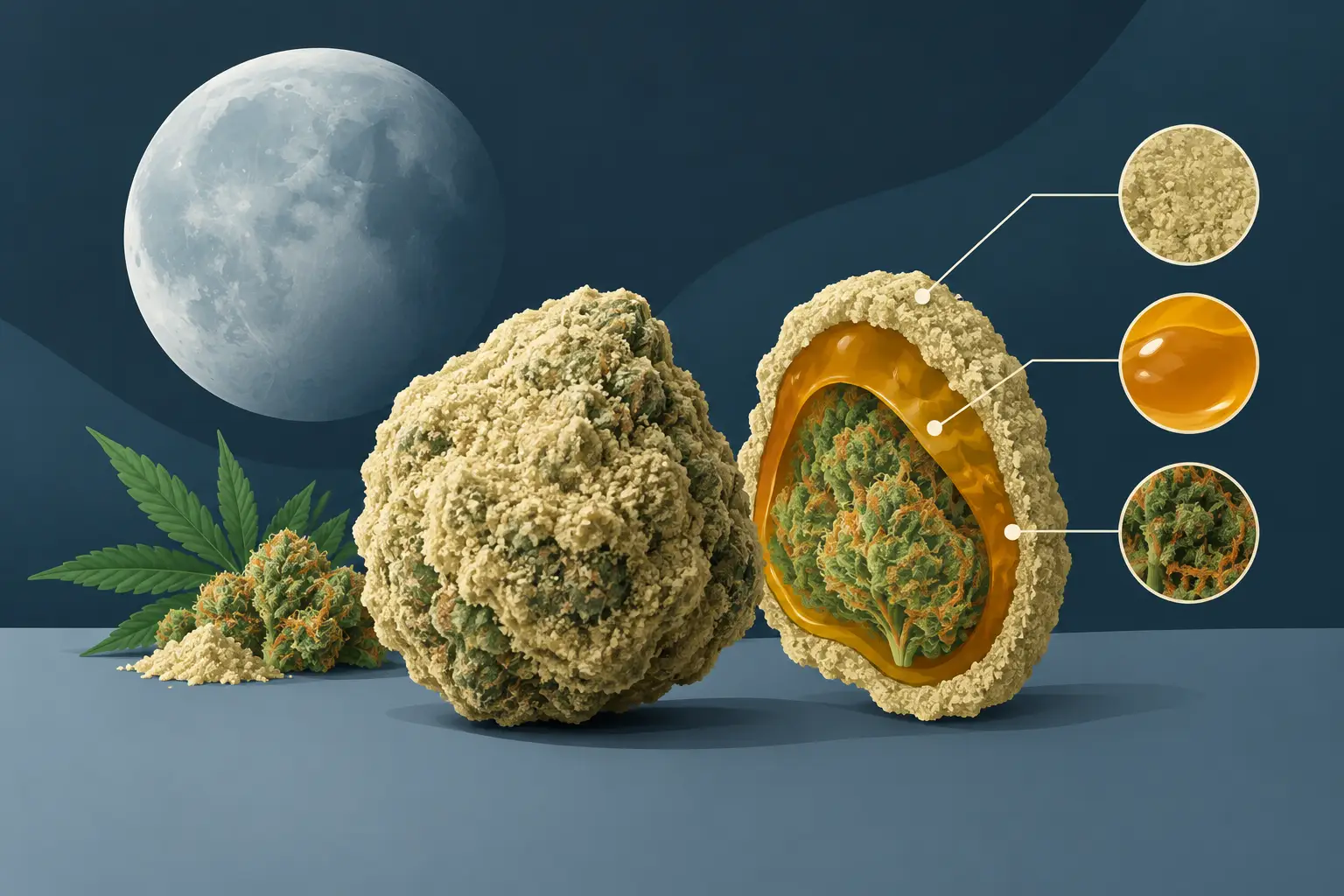
A moon rock can look like a small, frosted nug, but its strength comes from a stacked construction rather than a single exceptional flower strain. So, what makes moon rocks potent? It is the combination of cannabis flower, a sticky cannabis extract and a final coating of kief. Each layer can carry cannabinoids, and together they create a product that is usually much stronger by weight than standard dried flower.
That layered build also explains why moon rocks have such a big reputation. A quality piece brings the dense body of flower, the concentrated depth of extract and the aromatic dusting of resin glands in one compact format. It can be seriously flavourful, but it is not automatically better for every adult. Potency is only one part of the experience, and the gap between batches can be wide.
Flower provides the base, but not the whole story
Every moon rock starts with a bud. The flower matters because it supplies the structure, much of the natural terpene profile and the character that comes through underneath the coatings. A fresh, well-cured bud with an appealing aroma gives the finished product a better foundation than dry, tired flower ever could.
On its own, even a potent flower has limits. Dried cannabis flower is mostly plant matter, with cannabinoid-rich trichomes sitting across the surface. The THC percentage on a strong flower can be substantial, but moon rocks raise the concentration by adding forms of cannabis that contain less plant material and more resin.
Strain choice can still shape the feel. A fruity, dessert-style flower may carry sweet or creamy notes beneath a richer extract, while an earthy or gassy cultivar can make the finished profile darker and more pungent. That said, the extract and kief can easily become the dominant flavours, especially when they are made from different cultivars to the flower at the centre.
Cure and freshness affect the experience
Potency figures get attention, yet the condition of the flower can change how enjoyable a moon rock feels. Proper curing preserves aroma, helps the bud burn more evenly and avoids the brittle, dusty texture associated with old stock. If the core is excessively dry, it may crumble too quickly. If it is overly damp, it can be difficult to handle and may taste harsh.
Freshness also matters for flavour. Terpenes are volatile compounds, meaning aromas can fade when cannabis is exposed to heat, light and air. A moon rock may still test high in THC after poor storage, but a muted smell and flat flavour are not signs of top-shelf care.
The extract layer lifts cannabinoid density
The second layer is where moon rocks move beyond ordinary flower. The bud is coated in cannabis extract, often an oil, distillate, hash oil or another concentrated preparation. Extracts are made by separating and concentrating resinous compounds from the plant, so they generally contain a far greater cannabinoid concentration than flower.
Think of the difference in proportions. Flower includes stems, calyxes and other plant material alongside its trichomes. An extract is designed to gather more of the resin fraction. Once that extract wraps around the bud, it adds a concentrated source of THC or other cannabinoids across the surface.
There is no universal moon rock recipe, though. One product may use a light coating of terpene-rich oil, while another may be heavily saturated with a thick, high-THC distillate. The type, amount and quality of extract all influence final strength. That is why two moon rocks of similar size can produce very different effects.
A high number on a label also needs context. It is tempting to treat potency as a simple equation, but a whole moon rock is a blend of ingredients with separate cannabinoid levels and different weights. The final percentage depends on the exact proportions, not just the strongest component in the mix. Clear, batch-specific information is more useful than vague claims that something is “extra strong”.
Kief adds a third resin-rich layer
The final roll in kief is the visual signature people recognise straight away. Kief is a collection of separated trichomes, the tiny resin glands that hold cannabinoids and terpenes. When a coated bud is rolled through kief, those fine, golden-green particles cling to the extract and create the familiar crusted finish.
This outer layer is not merely for looks. Good kief contributes more cannabinoid-rich material while building aroma and texture. Depending on how it was collected and stored, it can add peppery, citrus, floral, sweet or fuel-like notes. It is also why a moon rock can feel deceptively dense in strength despite looking like one ordinary nug.
Quality is easy to confuse with quantity here. An aggressively thick coating may look impressive in a photograph, but the best result is a balanced one: enough extract to hold the kief, enough kief to add character, and enough quality flower left at the centre to retain a proper strain profile. Too much low-quality oil can bury the flavour. Too much loose kief can shed away before it ever reaches its intended use.
Why moon rock potency varies so much
There is no standardised definition of a moon rock. The name describes a format, not one fixed formula. This is the central reason labels and real-world experiences can vary so sharply from one product to the next.
The cannabinoid content of the flower, the strength and volume of extract, the quality of the kief and the size of the coating all matter. So do handling and storage. Kief can fall off, extract can migrate in warm conditions, and terpene loss can alter flavour long before the product looks obviously different.
Cannabinoid profiles matter too. Most people use “potent” to mean high in THC, but THC is not the only compound present. CBD, minor cannabinoids and aromatic terpenes may influence the overall subjective experience. Research into these interactions is still developing, and no terpene guarantees a particular feeling. Treat flavour descriptions as sensory clues, not promises about how a product will affect you.
Individual factors are just as relevant as the product itself. Tolerance, recent food intake, mood, medication, body chemistry and setting can all change how strongly someone experiences cannabis. A seasoned flower consumer may still find a concentrated, layered product unexpectedly intense. Someone returning after a break should be particularly cautious.
What makes moon rocks potent, and what makes them worth assessing
Potency should never be separated from quality control. Adults who are legally able to access cannabis are better served by products with transparent batch information, a clear cannabinoid breakdown where available, and signs of careful handling. An identifiable aroma, an even coating and a firm but not rock-hard texture can indicate attention to the finished product, although appearance alone cannot verify strength or purity.
Be wary of products that are suspiciously oily, smell of solvents, have an artificial perfume-like scent, or arrive with large amounts of loose material and damaged flower. A high THC claim does not compensate for poor storage, inconsistent preparation or unclear sourcing. Premium cannabis should earn its reputation through freshness, flavour and consistency, not hype alone.
Legality matters as well. UK laws around cannabis are restrictive, and non-medical possession and supply can carry serious consequences. Regulations vary by location and change over time, so adults should understand the law where they live before making any decisions.
A sensible approach to a high-strength format
Moon rocks are best treated as a high-potency cannabis product, not as everyday flower with a flashy name. Avoid mixing cannabis with alcohol or other intoxicants, and do not drive, cycle in traffic, operate machinery or make safety-critical decisions while impaired. Keep all cannabis products secured well away from children and pets.
For adults who choose to use legal cannabis, the sensible approach is patience. Give any initial amount time before considering more, particularly when trying an unfamiliar batch. The goal is not to prove tolerance or chase the highest possible number. It is to understand how a specific product lands for you in a calm, familiar setting.
If the experience becomes uncomfortable, reduce stimulation, hydrate, rest somewhere safe and ask a trusted sober person to stay nearby. Seek urgent medical help for severe symptoms, chest pain, loss of consciousness, or if there is any immediate risk to you or someone else. People who are pregnant, have a personal or family history of psychosis, or have concerns about medication interactions should speak with an appropriate healthcare professional before using cannabis.
The real appeal of a well-made moon rock is not simply that it is strong. It is the way quality flower, rich extract and aromatic kief can create a dense, flavour-led product with far more intensity than its size suggests. Respect that intensity, prioritise clear product information, and let quality speak louder than a headline THC number.