

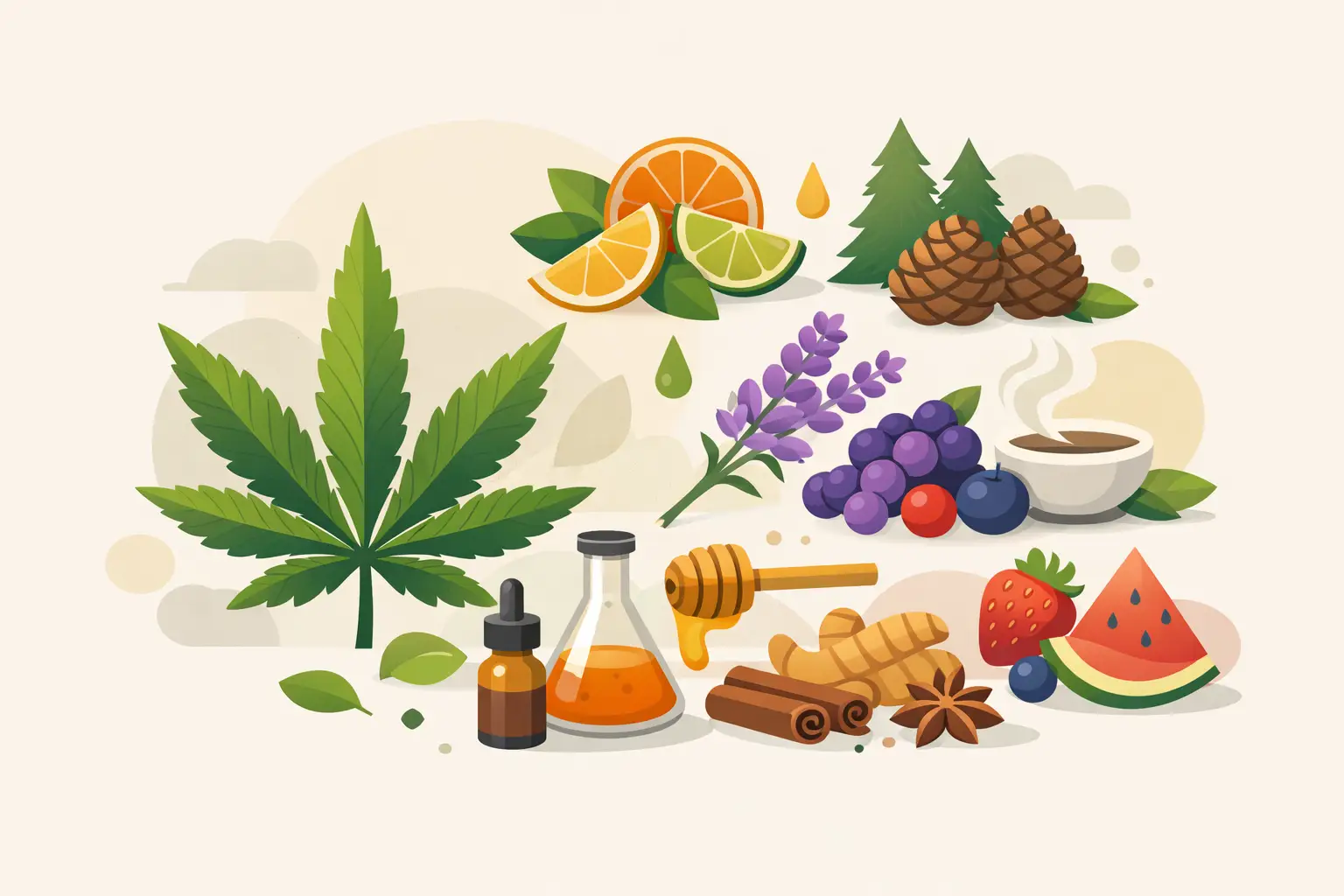
A proper cannabis terpene flavour guide changes the way you shop. Instead of picking a strain solely because the name sounds loud or the THC percentage catches your eye, you can read the flavour cues before the first grind. That matters when you want a jar that actually tastes like ripe fruit, sharp citrus, creamy dessert or deep old-school earth – not something that looks premium but lands flat.
Terpenes are aromatic compounds found throughout nature, including cannabis. They help create the smell you notice when a fresh pack is opened and the taste that stays on the palate after a pull. Genetics, growing conditions, harvest timing, drying, curing and storage all shape how clearly those notes come through. A great terpene profile is not just about being intensely scented. It should feel clean, distinctive and true to the strain.
Cannabis terpene flavour guide: start with your palate
Flavour is personal. One person will call a strain creamy and sweet; another gets pepper, gas or a herbal edge first. The aim is not to memorise a chart and pretend every batch tastes identical. It is to recognise the broad profiles you enjoy, then use terpene language to make smarter picks.
If candy-like strains are your lane, look for descriptions such as tropical fruit, berry, grape, citrus sweets, vanilla, cream or sherbet. Candy Rain, Candy Runtz and Blue Nerds-style profiles usually appeal to shoppers chasing loud sweetness with a more complex floral, fuel or creamy finish beneath it.
If you prefer a richer, more classic experience, earthy, woody, pine and spicy notes may be more your speed. These flavours can feel less sugary but no less premium, especially when the cure is on point. A strain such as Colombian Gold may lean towards herbal, woody and bright citrus territory, while Gelato 41 is often sought for its dessert-like creaminess balanced with earth, gas and peppery depth.
Think of a strain description like a tasting note rather than a guarantee. The same genetics can present differently from batch to batch. Freshness also counts for a lot: terpenes are volatile, which means careless heat, air and light exposure can weaken the aroma over time.
The core terpenes and what they taste like
You do not need a chemistry degree to get useful value from terpene names. These are the ones you will see most often, along with the flavour direction they can bring to the table.
Myrcene: earthy, musky and ripe-fruit depth
Myrcene is commonly associated with earthy, herbal, musky and sometimes mango-like notes. It often sits behind fuller-bodied profiles, adding that damp soil, clove or overripe fruit character that makes a sweet strain feel less one-dimensional.
Love berry strains that finish with a darker, savoury edge? Myrcene may be part of what you are picking up. It can be brilliant in flower, but poor storage can make a myrcene-rich profile feel dull rather than deep. Fresh, properly cured bud should smell alive, not stale.
Limonene: citrus peel, sweets and sharp brightness
Limonene is the terpene most people learn first because the name gives it away. Expect lemon zest, orange peel, grapefruit, lime sweets or bright tropical fruit. It lifts a profile and can make dense dessert or fuel notes feel cleaner and more energetic on the nose.
Citrus does not always mean sour. In a sweet cross, limonene may read more like fizzy orange sweets. In a gassy strain, it can feel like sharp lemon cleaner or bitter grapefruit peel. That contrast is exactly why limonene-heavy profiles have such a strong fan base.
Caryophyllene: pepper, spice and warm fuel
Beta-caryophyllene brings black pepper, baking spice, clove and woody warmth. It is often the reason a fruity strain has a little bite at the back of the throat, or why a creamy profile finishes with pepper and gas rather than pure sugar.
For some shoppers, this is the difference between a nice flavour and a memorable one. Caryophyllene gives weight and structure, particularly in punchier, savoury, diesel-leaning cultivars. If you like Bruce Banner-style intensity, a peppery, fuel-forward layer is usually part of the appeal.
Pinene: fresh pine, herbs and crisp green notes
Pinene brings forest-fresh pine, rosemary, basil and a crisp green character. It can be prominent in old-school, earthy genetics, but it also works beautifully as a top note in fruity strains. Think of it as the sharp snap that stops a sweet profile becoming sticky or flat.
Pinene is divisive. If you only want sweet-shop flavours, too much pine may feel medicinal or resinous. If you enjoy clean, natural-tasting flower, it can make a profile feel seriously refined.
Linalool: floral, lavender and soft sweetness
Linalool is associated with floral, lavender-like, perfumed and lightly spicy notes. In cannabis, it is rarely the only flavour you notice. More often, it softens a louder blend of fruit, cream or spice and gives it a smoother, more aromatic finish.
This is one to look for when you enjoy strains with violet, rose, confectionery or delicate herbal descriptions. It is subtle, but subtle does not mean weak. A small floral note can turn a standard sweet profile into something properly layered.
Humulene: hops, wood and dry earth
Humulene can bring hoppy, woody, dry-earth and herbal flavours. It shares some territory with caryophyllene, but tends to feel drier and more botanical. Fans of classic, savoury flower often rate this sort of profile because it tastes grown-up, resinous and far away from artificial candy.
Reading flavour notes without getting sold a fairy tale
Strain names are fun, but the name alone cannot tell you the full story. “Candy”, “cake”, “gelato” and “runtz” suggest a direction, not a fixed recipe. Check for the actual aroma notes: fruit, cream, gas, pepper, earth, citrus, floral or pine. The most useful descriptions explain how those elements work together.
For example, “sweet and fruity” is a starting point. “Grape sweets up front, creamy vanilla through the middle, then diesel and pepper on the finish” gives you a much clearer expectation. That is the sort of detail worth paying attention to when choosing top-shelf flower.
Be cautious with claims that a single terpene will produce a guaranteed feeling. Cannabis experiences vary with the product’s full cannabinoid profile, individual tolerance, dose, setting and plenty else besides. Terpene information is best used as a flavour map first. Any broader effect is not a promise printed on the label.
Flower, vapes and extracts do not taste the same
The format changes the experience. Flower gives you the most natural view of a strain’s cured aroma, with smoke and combustion adding their own roasted, earthy character. A well-kept flower jar lets you appreciate the dry scent, the broken-bud aroma and the final flavour separately.
Vapes can make top notes feel clearer, especially citrus, candy and floral terpenes. Temperature matters: too much heat can flatten delicate flavours or make a profile feel harsh. If flavour is the priority, slower, lighter draws usually reveal more than hammering a device back-to-back.
Live-resin badder, wax and other concentrates can be seriously terpene-forward because they are made to preserve more of the plant’s aromatic character. They can also be far more intense. A profile that feels pleasantly gassy in flower may become full-volume fuel, pepper and fruit in a concentrate. Start low, give your palate a moment, and judge the flavour once it settles.
Edibles are different again. Their taste may come mainly from added fruit flavouring, sugar, chocolate or other ingredients rather than the original strain’s natural terpene profile. Treat “strain-inspired” edible flavours as a tasty cue, not the same thing as tasting the flower itself.
How to keep the flavour you paid for
Even excellent cannabis will not stay loud forever if it is stored badly. Keep flower in an airtight glass container in a cool, dark place. Avoid leaving it in direct sunlight, near radiators or in a hot car. Excessive heat dries out aromatic compounds; repeated opening also lets scent escape.
Do not grind a whole stash in advance. Break down only what you plan to use, then keep the rest protected. With extracts and vapes, follow the product storage guidance and keep them away from heat. A little care keeps those sweet, fruity or earthy notes closer to how the product was meant to land.
The best pick is not always the loudest or the sweetest. It is the flavour profile you will still be excited to open halfway through the pack. Whether you rate citrus candy, creamy dessert, deep gas or old-school pine, learn the notes, trust your own palate and give fresh, properly stored cannabis the respect it deserves.