

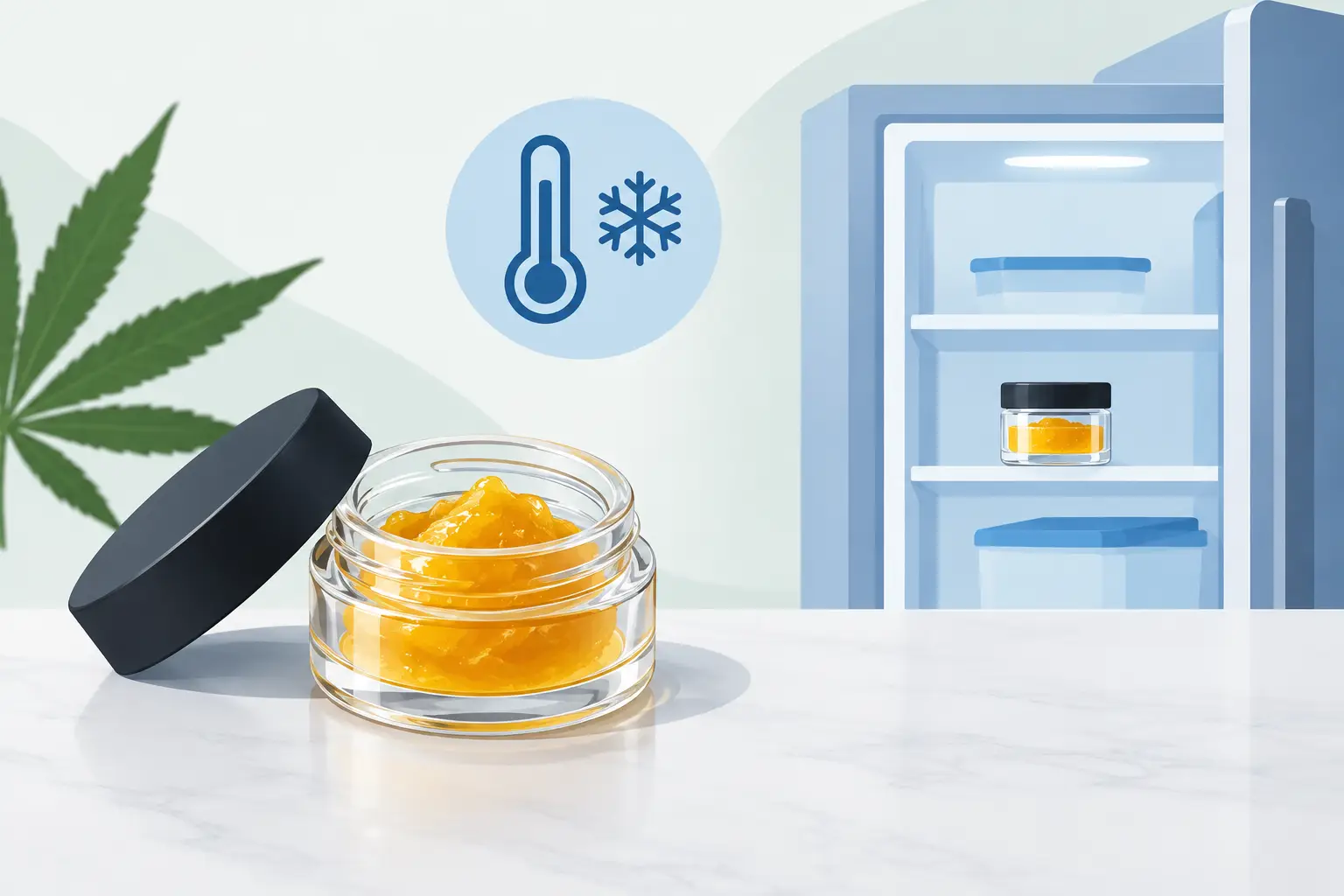
A fresh jar of live resin should smell loud, look glossy and carry the terpene-rich flavour that makes the extract worth choosing in the first place. So, does live resin need refrigeration? Usually, yes – especially if you will not be using it within a few days. Cool, stable storage helps protect its aroma, texture and overall quality, but refrigeration only works properly when moisture is kept out.
Does live resin need refrigeration for freshness?
Live resin is made to preserve more of the plant’s volatile compounds than many traditional extracts. Those compounds, particularly terpenes, are responsible for the bright fruit, sharp citrus, sweet candy, pine and earthy notes people look for in a premium concentrate. They are also sensitive to heat, oxygen and light.
A refrigerator slows down the changes that can flatten a live resin’s flavour or make it dry out, darken or turn less workable over time. For a sealed jar that is being stored for more than a week or two, refrigeration is generally the smart move. Think of it as protecting the flavour profile you paid for, not just putting a pot somewhere cold.
That said, live resin does not have to live permanently in the fridge if you are finishing it quickly. A small amount being used over a few days can usually sit in a consistently cool, dark cupboard, provided the container is tightly closed and nowhere near a radiator, sunny windowsill, warm electronics or a steamy kitchen.
The real enemy is temperature swings. Leaving concentrate in a hot bag, a car or an overly warm room can do more harm in an afternoon than sensible storage does over weeks.
The best temperature depends on how long you are storing it
For regular use, refrigerator temperatures are a reliable middle ground. A standard fridge is usually around 2-8°C, which is cool enough to preserve the extract without making every use feel like a long wait. Keep the jar upright in a stable part of the fridge rather than the door, where temperatures rise and fall every time it is opened.
If you plan to keep unopened live resin for several months, freezing can be an option. It is most useful for long-term storage, not a jar you open every evening. The catch is condensation: taking a cold container out, opening it immediately, then returning it to the freezer invites moisture into the concentrate. Water is not a friend to texture, clean handling or flavour.
For most people, the easy rule is this: refrigerate for short- to medium-term freshness; freeze only fully sealed, well-protected jars intended for longer storage; and use a dark, cool cupboard only for a small stash you expect to finish soon.
Let cold jars warm up before opening
This is the storage detail that gets missed most often. When live resin comes out of the fridge or freezer, leave the container closed until it reaches room temperature. For a refrigerated jar, that may take 15-30 minutes. A frozen jar can take longer.
Opening it while it is still cold allows humid room air to meet the chilled concentrate and inner surface of the jar. That can create condensation. It may seem minor, but repeated exposure can make the product harder to handle and compromise a carefully preserved batch.
Patience protects the terps. Let the sealed jar come up to temperature, then open it, take what you need with a clean tool and close it straight away.
Container choice matters as much as refrigeration
Live resin is often sold in small glass jars for a reason. Glass is non-reactive, easy to clean and offers a solid seal when the lid fits properly. For longer storage, keep the product in its original airtight glass container whenever possible.
Silicone pots are convenient for brief use, but they are not always the best choice for storing highly aromatic concentrates over long periods. Strong terpene profiles can interact with lower-quality silicone, and a loose lid can allow aroma and moisture to become problems. If the extract arrived in a quality sealed glass jar, there is rarely a reason to move it.
Avoid leaving resin on parchment, in an uncapped dab tool container or in a jar with residue around the thread. A sticky, imperfect seal exposes the concentrate to more air each time it is stored. Wipe the rim carefully if needed, then tighten the lid without cross-threading it.
For freezer storage, add a second layer of protection. Place the closed jar in a small airtight bag or container before freezing. This reduces exposure to freezer odours and helps keep moisture away when the jar is eventually thawed.
Heat, light and air can change live resin fast
Refrigeration is useful because it addresses heat, but it is only one part of proper storage. Direct light can degrade cannabinoids and delicate aromatic compounds. Air exposure allows oxidation. Warmth makes the extract softer and can encourage volatile terpenes to evaporate each time the lid comes off.
You may notice these changes as a darker colour, a less expressive smell, a dry or crumbly consistency, or a sauce that becomes unusually runny. None of those signs automatically mean a product is unsafe, as extracts naturally vary by strain and texture. But they can indicate that the live resin has spent too long in poor conditions.
A stable routine makes the difference. Keep the lid closed, avoid digging around with fingers or unclean tools, and do not leave the jar open while you prepare other things. A premium flavour-forward extract deserves better than being left under a bright lamp for half an hour.
What about live resin badder, sauce and sugar?
Different consistencies can respond differently to temperature, but the storage principles stay the same. Live resin badder may become firmer in the fridge and softer at room temperature. Letting it warm while sealed usually brings it back to a more manageable consistency without stirring or whipping it unnecessarily.
Live resin sauce often contains a more liquid terpene fraction alongside cannabinoid crystals. Keep it upright so it does not spread around the lid and seal. If the sauce appears to separate slightly after storage, that is not always a fault. Give the sealed jar time to reach room temperature before judging its texture.
Sugar and crystalline textures can look drier than sauce by nature, so do not mistake their natural appearance for damage. The better signals are aroma, colour and whether the product has been repeatedly exposed to heat or air. Every extract has its own character – a Gelato-style creamy profile will not look or behave exactly like a sharp, fruity cultivar.
Common live resin storage mistakes
The biggest mistake is assuming colder always means better. Constantly moving a jar between warm room temperature, the fridge and the freezer creates more risk than choosing one sensible storage plan and sticking to it. Frequent thawing and re-freezing is especially unhelpful.
Another mistake is storing the jar in the fridge door. It is convenient, but it is also the least stable zone. Put it in a small opaque container towards the back of a shelf instead. That protects it from light and prevents it being knocked over behind the yoghurt.
Finally, do not overlook hygiene. A clean, dry dab tool helps prevent debris and moisture entering the concentrate. Keep live resin securely stored away from children, pets and anyone who should not have access to it.
A simple routine that keeps flavour on point
When a new jar lands, decide whether it is for immediate use or the longer haul. For immediate use, keep it sealed in a cool, dark place and avoid heat. For anything you want to savour over the coming weeks, place the original closed glass jar in the refrigerator. Before each use, take it out and allow it to reach room temperature unopened.
If you have bought several jars and want to preserve one for months, freeze that unopened backup in an additional airtight container, then thaw it slowly before opening. It takes a little planning, but it is the difference between a concentrate that still tastes bright and one that feels like it has lost its top gear.
Live resin is built around freshness. Store it cool, dark, airtight and handled with care, and the last scoop has a far better chance of tasting as vibrant as the first.