

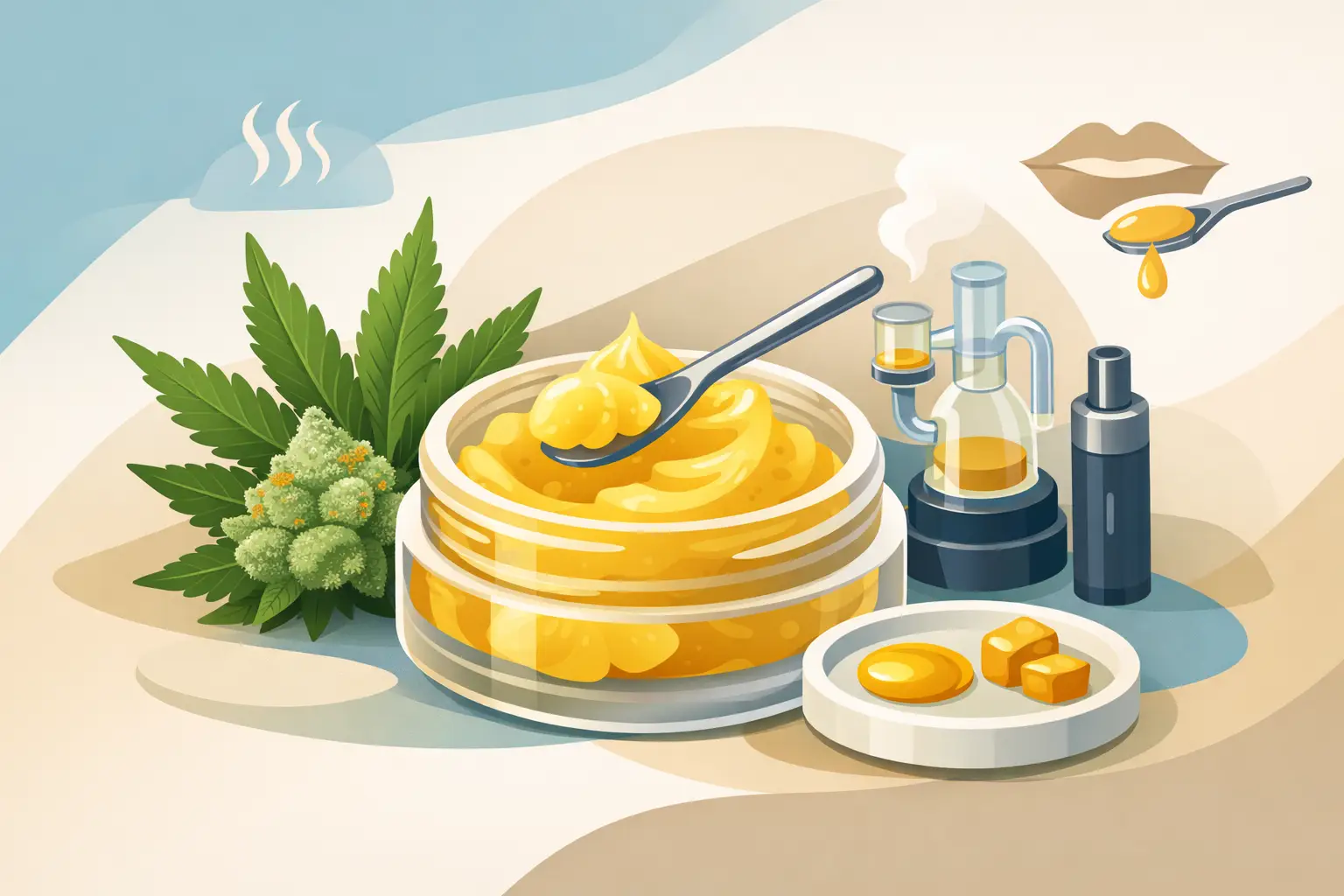
A glossy, whipped concentrate with a soft, scoopable finish, cannabis badder is built for people who care about flavour as much as strength. If you have asked what is cannabis badder, the short answer is that it is a cannabis extract with a creamy, aerated consistency – somewhere between thick cake icing and soft wax – that is often prized for its loud aroma and terpene-rich character.
Badder is not a strain in itself. It is a concentrate texture, and the final experience depends heavily on the flower or fresh-frozen plant material behind it. A fruity cultivar may lean towards candy, citrus or tropical notes, while an earthier one can bring out pine, gas, spice or deep herbal flavours. That is why two jars described as badder can look similar but smell and taste completely different.
What Is Cannabis Badder Made From?
Cannabis badder starts as a concentrated extract, meaning cannabinoids and aromatic compounds have been separated from the bulk plant material. Producers use specialist extraction and post-processing methods to create the finished consistency. The exact approach varies, but the aim is usually to preserve a strong terpene profile while developing the familiar soft, whipped body.
The name is sometimes spelt batter or budder. In ordinary conversation, people often use the terms interchangeably, although a producer may use one word to describe a slightly wetter, fluffier or more stable result. There is no universal texture rule that applies to every batch.
What makes badder distinctive is its balance of density and movement. It should generally hold together rather than run like oil, yet remain pliable enough to lift in a small amount. Freshness, temperature and the particular extract all affect that consistency. A cool room can make it firmer; warmth can make it softer and more aromatic.
Why terpene preservation matters
Terpenes are aromatic compounds found throughout the cannabis plant. They are a major reason one extract gives off ripe berry sweetness while another smells like lemon peel, fresh pine or fuel. In a quality badder, the aroma should feel clear and expressive rather than flat, burnt or chemically harsh.
That sensory side matters, but it is not a guarantee of quality or safety on its own. A loud smell does not tell you the cannabinoid strength, whether a product has been tested, or how it may affect an individual. Think of flavour as one part of the picture, not the entire story.
Cannabis Badder vs Wax, Shatter and Live Resin
Concentrates can be confusing because the same source material may be presented in several forms. The main difference is usually texture, handling and how the extract has been processed after extraction, rather than a simple ranking of which one is “best”.
Wax tends to be drier, more crumbly and less glossy than badder. It can range from soft and pliable to brittle and honeycomb-like. Shatter is usually glassy, firm and translucent, snapping into pieces rather than folding or whipping. Sauce is wetter, often with a liquid portion and visible crystals. Rosin is a solventless extract, but it too can be cured into a badder-like consistency.
Then there is live resin badder. “Live resin” normally refers to extracts made from plant material that was frozen soon after harvest rather than dried and cured in the conventional way. The reason enthusiasts seek it out is the potential for a more vivid, plant-forward aroma. Live resin describes the source and style of extraction; badder describes the texture. Put them together and you have live resin badder.
Neither format automatically wins. Shatter can appeal to people who prefer a neat, stable sheet. Wax can be easy to portion when it is dry. Badder often stands out for its creamy texture and big, expressive scent. The right choice depends on personal preferences, storage conditions and, crucially, whether the product is legal and appropriately verified where you live.
What Good Cannabis Badder Usually Looks and Smells Like
Colour alone can be misleading. Badder may range from pale gold to amber, tan or deeper orange, depending on the cultivar, extraction process, age and storage. A lighter shade does not automatically mean a cleaner or more potent extract, and a darker one is not automatically poor quality.
Instead, look at the whole sensory picture. Fresh badder commonly has a consistent appearance, a moist-looking surface and a distinct aroma that matches its strain or cultivar character. It should not smell mouldy, sour in an unpleasant way, heavily burnt or like harsh artificial chemicals.
Texture offers clues too. Very dry, dusty badder may have lost volatile aroma compounds. Excessively runny material may simply have warmed up, but it can also be difficult to handle and should be assessed carefully. A stable, creamy finish is often what people expect from the category, although some batches naturally lean more buttery, sticky or granular.
Packaging makes a practical difference. Concentrates are sensitive to heat, air and light. A well-sealed, clearly labelled container helps protect the aroma and reduces the chance of sticky leaks or unnecessary exposure. Never rely on appearance alone where safety is concerned, particularly if the source is unknown.
Potency: Why Badder Deserves Extra Care
Badder is concentrated cannabis. That means it can contain far higher levels of cannabinoids than cannabis flower, and the difference is not always obvious from a tiny portion. The creamy look and sweet, dessert-like aroma can make an extract feel approachable, but its effects may still be intense and fast-moving.
High-THC products can impair coordination, reaction time, judgement and memory. They may also trigger anxiety, panic, paranoia or confusion in some people, especially those who are inexperienced, sensitive to THC, already anxious, or using other substances. Risk can increase with alcohol, sedatives and certain prescription medicines.
People with a personal or family history of psychosis or other serious mental-health conditions should take particular care and seek professional advice. Cannabis products should be kept away from children and pets, who can become seriously unwell after accidental exposure. If someone is severely distressed, very confused, difficult to wake, has chest pain, or has breathing difficulties, seek urgent medical help.
No concentrate should be used before driving, cycling in traffic, operating machinery, working at height or taking on responsibility for another person’s safety. The effects may last longer than expected, even after the obvious high has eased.
Storage That Protects Flavour and Reduces Mess
Badder is best kept sealed, upright and away from direct sunlight, heat sources and curious hands. Warm cars, window sills and pockets are poor places for it. Heat can change the texture, dull the aroma and leave the product difficult to manage.
A cool, dark cupboard may be suitable for short-term storage, depending on the packaging and label instructions. For longer storage, a refrigerator can help preserve texture and aroma, though repeated warming and cooling may encourage condensation. If it has been chilled, allow the sealed container to return towards room temperature before opening it. That simple step can reduce moisture getting inside.
Use clean handling tools rather than fingers. This protects the product from dust and skin oils, and keeps the container from becoming a sticky headache. If the texture changes, do not assume it is unsafe or ruined straight away – badder can become firmer or looser with temperature changes. However, any unusual contamination, mould-like growth or seriously off-putting smell is a reason not to use it.
The UK Legal Position
In the UK, cannabis containing THC is generally controlled under the Misuse of Drugs Act 1971. Possession, supply and production can carry serious legal consequences unless a product is supplied through a lawful medical route or falls within a specific legal exemption. Being over 18 does not make recreational THC cannabis legal.
That point matters because online branding, colourful packaging and familiar strain names can blur the line between what is marketed and what is lawful. Before handling any cannabis extract, check the law that applies to you and do not assume that a product advertised online is legal, tested or safe.
For anyone who values flavour-forward extracts, badder is easy to understand as a format: soft texture, high concentration and an aroma that can put the plant’s character front and centre. The smarter question is always the one behind the label – where did it come from, how has it been handled, and is it legal and suitable for your circumstances?